
Are you tired of living paycheck to paycheck? Do you want to build a financial cushion but feel like there's never enough money left over? You're not alone. According to recent surveys, over 60% of adults struggle to save even $500 for emergencies.
The good news? Saving money fast isn't about earning a six-figure salary — it's about making smarter choices with the money you already have. In this guide, I'll share proven strategies that have helped thousands of people (including myself) save thousands of dollars quickly.
1. Cut These Expenses First
Before you start any savings plan, you need to identify where your money is going. Most people are shocked when they actually track their spending for a month. Here are the biggest money drains to tackle first:
Cancel Unused Subscriptions
The average person spends over $200 per month on subscriptions they barely use. Go through your bank statements and cancel anything you haven't used in the past 30 days. This includes streaming services, gym memberships, apps, and subscription boxes.
Reduce Dining Out
Eating out costs 3-5 times more than cooking at home. You don't have to give it up entirely, but cutting restaurant visits from 4 times a week to once a week can save you $300-500 per month. Check out our meal prep guide for affordable home cooking strategies.
Stop Impulse Buying
Implement the 24-hour rule: before buying anything non-essential, wait 24 hours. If you still want it the next day, consider it. You'll find that most impulse purchases lose their appeal overnight.
Track every dollar you spend for one month. Most people find at least $200-400 in unnecessary spending they can redirect to savings.
2. The 50/30/20 Rule
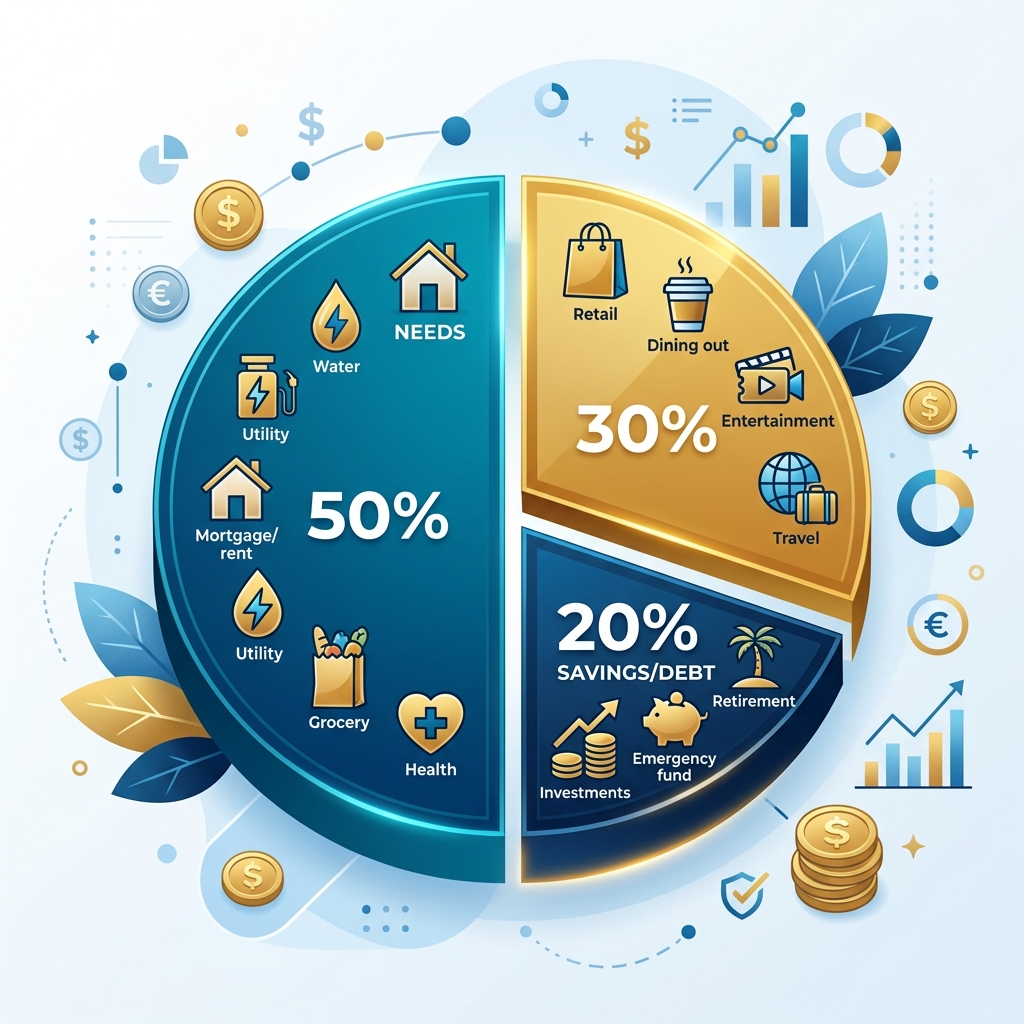
One of the simplest and most effective budgeting frameworks is the 50/30/20 rule. Here's how it works:
- 50% for Needs: Rent, utilities, groceries, insurance, minimum debt payments
- 30% for Wants: Dining out, entertainment, hobbies, shopping
- 20% for Savings: Emergency fund, investments, extra debt payments
If you earn $3,000 per month after taxes, that means $1,500 goes to needs, $900 to wants, and $600 straight to savings. Even if you can only manage 10% at first, that's still $300 per month — $3,600 per year.
Want a deeper dive into this method? Read our complete guide on budgeting with the 50/30/20 rule.
3. Automate Your Savings
The secret to consistent saving is removing yourself from the equation. When you automate your savings, the money moves before you have a chance to spend it.
Set Up Automatic Transfers
Set up an automatic transfer from your checking account to your savings account on payday. Even if it's just $25 or $50 per paycheck, it adds up. Over a year, $50 per week becomes $2,600.
Use Round-Up Apps
Apps like Acorns and Chime round up your purchases to the nearest dollar and save the difference. A $3.75 coffee becomes $4.00, and that $0.25 goes straight to savings. It sounds small, but users typically save $30-50 per month this way — completely on autopilot.
Keep Savings Separate
Keep your savings in a separate high-yield savings account (HYSA). Out of sight, out of mind. Many HYSAs now offer 4-5% APY, meaning your money earns money while you sleep. That's free money just for parking your cash in the right place.
4. Quick Ways to Earn Extra Money
Sometimes the fastest way to save is to earn more. Here are quick wins you can start this week:
- Sell unused items: Go through your closet, garage, and storage. List items on Facebook Marketplace, eBay, or Poshmark. Most people have $500-1,000+ worth of stuff they never use.
- Start a side hustle: Freelancing, tutoring, delivery driving, or selling digital products can bring in an extra $500-2,000 per month. Check out our side hustle guide for ideas.
- Cash back and rewards: Use cash-back credit cards and apps like Rakuten to earn money on purchases you're already making.
- Negotiate bills: Call your phone, internet, and insurance providers and ask for a better rate. Many companies offer loyalty discounts if you simply ask.
5. Build Your Emergency Fund
Your first savings goal should be a $1,000 emergency fund. This covers unexpected car repairs, medical bills, or job loss. Once you hit $1,000, work toward 3-6 months of living expenses.
"Do not save what is left after spending; instead, spend what is left after saving." — Warren Buffett
An emergency fund isn't just financial protection — it's peace of mind. Knowing you have a safety net reduces stress and helps you make better financial decisions overall.
6. Develop a Savings Mindset
The most important factor in saving money isn't your income — it's your mindset. Here are habits that separate successful savers from everyone else:
- Set specific goals: "I want to save $5,000 by December" is much more motivating than "I want to save more."
- Track your progress: Use a spreadsheet or app to watch your savings grow. Seeing the numbers increase is incredibly motivating.
- Celebrate milestones: Reward yourself (modestly) when you hit savings goals. This keeps you motivated for the long haul.
- Find your "why": Whether it's a house, a trip, or financial freedom — having a clear reason to save makes it easier to say no to unnecessary spending.
Saving money is a skill, not a talent. Start small, be consistent, and automate as much as possible. Even saving $5 a day equals $1,825 per year.
Conclusion
Saving money fast is absolutely possible, regardless of your income level. Start by cutting unnecessary expenses, implement the 50/30/20 rule, automate your savings, and consider ways to earn extra income. The key is to start today — not tomorrow, not next month.
Remember: every dollar saved is a dollar working for your future. The grind starts now.
Frequently Asked Questions
What is the easiest way to cut my monthly expenses?
The single easiest way to cut monthly expenses instantly is to audit your subscriptions and recurring bills. Go through your last three bank statements and highlight every recurring charge. Cancel any streaming services, gym memberships, or app subscriptions you haven't used in the last 30 days. Next, call your internet and car insurance providers to negotiate a lower rate or threaten to switch to a competitor. These two steps alone often save people $100-$200 per month with less than an hour of work.
How much of my income should I be saving?
A good benchmark is the 20% rule (from the 50/30/20 budget), meaning you aim to save or invest 20% of your after-tax income. However, if you are aggressively trying to build an emergency fund, pay off high-interest consumer debt, or save for a house down payment, you might push this to 30% or even 40% temporarily. If you are just starting out, even saving 5% is better than zero. The habit of saving is initially more important than the amount.
Is it better to save money or pay off debt first?
You should do both, but in a specific order. First, save a small "starter" emergency fund of about $1,000 to cover minor unexpected expenses (so you don't go further into debt when your car breaks down). Second, aggressively pay off high-interest debt (like credit cards with 20%+ APR). The math is simple: you cannot out-save or out-invest a 25% credit card interest rate. Once high-interest debt is cleared, redirect all that extra cash flow into building a full 3-6 month emergency fund.