
When we think about our biggest monthly expenses, housing and food immediately come to mind. But there's a silent budget killer that drains our bank accounts bit by bit, every single day: commuting. As we navigate the economic landscape of 2026, the costs associated with getting to and from work have skyrocketed. Fuel prices are volatile, public transit fares continue to rise, and the hidden costs of vehicle maintenance and depreciation take a massive toll on our long-term financial health.
In this comprehensive guide, we will break down the true cost of commuting and explore actionable, proven strategies to slash these expenses. Whether you drive a gas-guzzling SUV, take a daily train, or utilize ride-sharing apps, there are numerous ways to optimize your travel and keep more money in your pocket. By rethinking how we move, we can save thousands of dollars annually, reduce our carbon footprint, and even improve our physical and mental well-being.
The average commuter in the United States spends between $2,000 and $5,000 annually just to get to and from their place of employment. For super-commuters—those traveling more than 90 minutes each way—that number can easily double. This is money that could be invested in retirement accounts, used to pay off high-interest debt, or saved for a down payment on a home. Understanding the depth of this expense is the first step toward reclaiming your hard-earned wealth.
1. Understanding the True Cost of Your Commute
Most people underestimate the financial impact of their commute. When asked how much it costs to get to work, the average person typically calculates only the cost of fuel or a monthly transit pass. However, the true cost of commuting is far more complex and insidious. For drivers, it involves a combination of direct and indirect expenses that add up to a staggering sum over the course of a year.
First, let's look at the direct costs. These include the obvious expenditures: fuel, tolls, parking fees, and public transit tickets. Depending on your location and distance from the office, these can easily exceed $200 to $400 per month. But the indirect costs are where the real financial damage occurs. Every mile you drive accelerates the depreciation of your vehicle. A car is a depreciating asset, and adding thousands of commuting miles each year significantly lowers its resale value.
Then there's maintenance. More miles mean more frequent oil changes, brake replacements, tire rotations, and general wear and tear. According to the AAA (American Automobile Association), the average cost of owning and operating a new vehicle in 2026 is approaching $12,000 per year, heavily influenced by mileage. Furthermore, higher annual mileage often results in higher insurance premiums, as insurance companies associate more time on the road with an increased risk of accidents.
Beyond the financial costs, there's the cost of time. Time is our most valuable asset. If you spend an hour commuting each way, that's two hours a day, 10 hours a week, and over 500 hours a year spent in transit. This is time that could be used for side hustles, learning new skills, exercising, or simply relaxing with family. When we factor in the opportunity cost of this lost time, the true cost of commuting becomes truly alarming. By assigning a monetary value to your time—for example, your hourly wage—you will quickly see that a long commute is one of the most expensive lifestyle choices you can make.
2. The E-Bike Revolution: A Game Changer
If you live within 10 to 15 miles of your workplace, you are in the prime demographic to take advantage of one of the most effective cost-cutting tools available today: the electric bicycle. The e-bike revolution is in full swing in 2026, and for good reason. It offers the perfect middle ground between the physical exertion of a traditional bicycle and the expense of a motor vehicle, making it an accessible option for people of all fitness levels.
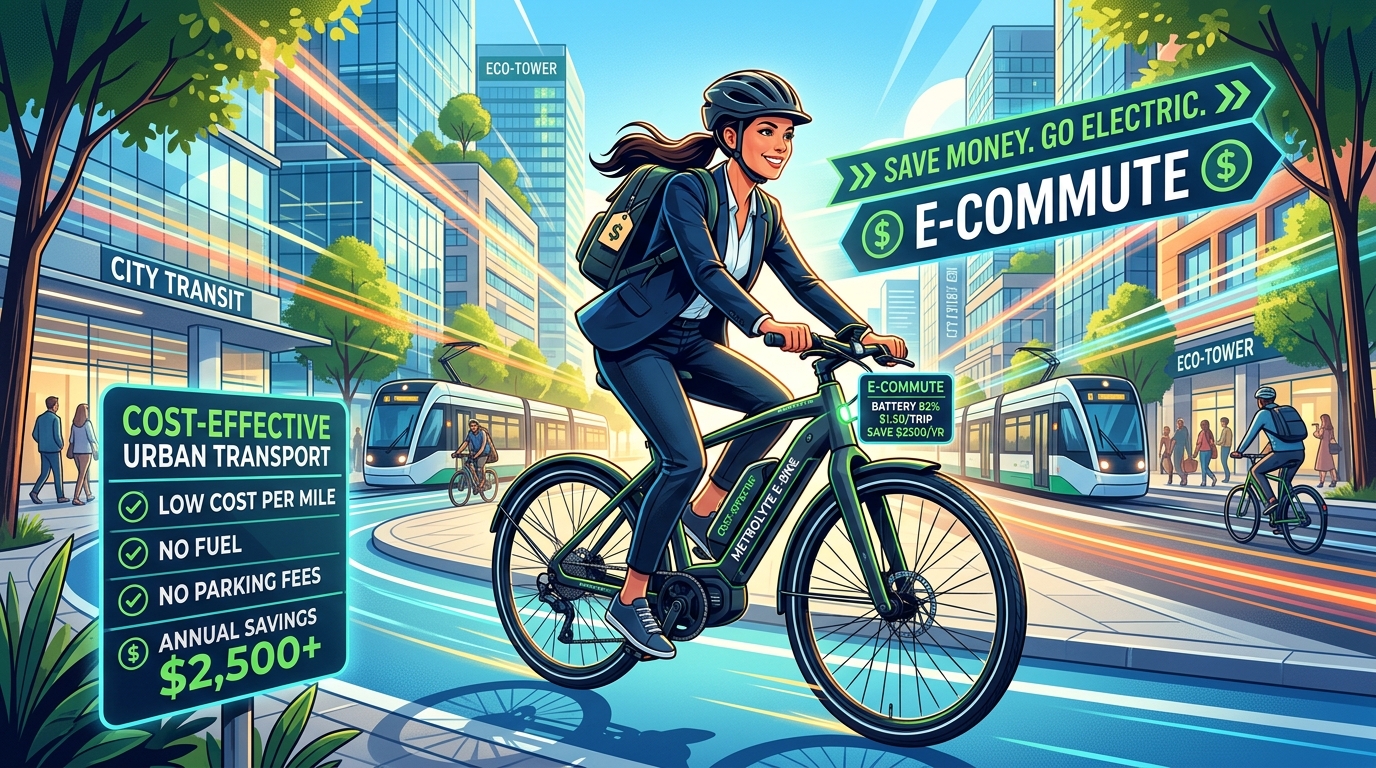
Switching your daily commute from a car to an e-bike can yield massive financial returns. The cost of charging an e-bike battery is negligible—often mere cents per charge. Compare this to filling up a gas tank, which can cost upwards of $50 to $80 depending on your vehicle. You also eliminate parking fees, which in major metropolitan areas can easily exceed $300 a month. Maintenance on an e-bike is minimal compared to a car; occasional brake pad replacements and tire changes are the primary expenses, totaling perhaps a hundred dollars a year.
We highly recommend looking into high-quality options like the Mooncool e-bike. Not only does it provide a reliable, efficient mode of transportation, but it also allows you to bypass traffic congestion, turning a stressful, unpredictable car commute into a consistent, enjoyable ride. The pedal-assist technology means you won't arrive at the office sweating, yet you still get a low-impact cardiovascular workout, killing two birds with one stone: saving money on the commute and potentially canceling that expensive gym membership.
The financial math is undeniable. Even if you purchase a premium e-bike for $1,500, the savings on gas, parking, insurance, and car maintenance will often pay for the bike within the first six to eight months. Over a five-year period, an e-bike commuter can easily save over $15,000 compared to a car commuter. It is, without a doubt, one of the highest-ROI financial decisions a modern commuter can make, while simultaneously providing significant mental health benefits through outdoor exposure and light exercise.
3. Optimizing Public Transit
For those who live too far to bike or lack the safe cycling infrastructure, public transit remains a highly viable alternative. However, simply buying a daily ticket at the kiosk is often the most expensive way to utilize buses or trains. To truly slash costs, you need to optimize how you pay for and use public transportation systems in your region.
The first step is to aggressively analyze your usage. If you are commuting five days a week, a monthly or annual pass is almost always more cost-effective than paying per ride. Many transit authorities offer significant discounts for long-term commitments. Additionally, you must look into employer-sponsored transit programs. In many countries, employers allow you to purchase transit passes using pre-tax dollars through commuter benefits programs. This means the money is deducted from your gross paycheck before income taxes are calculated, effectively giving you a 20% to 30% discount on your commute, depending on your tax bracket.
Another strategy is leveraging off-peak travel discounts. Some transit systems offer reduced fares if you travel outside of the standard rush hours (typically 7-9 AM and 4-6 PM). If your employer allows flexible working hours, shifting your schedule to start at 9:30 AM or 10:00 AM can reduce your daily fare and provide a less crowded, more comfortable journey where you might actually get a seat and be able to read or work.
Finally, consider multi-modal commuting strategies. Perhaps you can drive halfway to a free park-and-ride lot in the suburbs and take the express train the rest of the way, avoiding expensive downtown parking garages entirely. Or, use a lightweight folding bike or electric scooter for the "last mile" of your commute from the central train station to the office, eliminating the need for an additional local bus transfer or a pricey ride-share.
4. The Power of Carpooling and Ridesharing
If driving your personal vehicle is absolutely unavoidable due to location or job requirements, you shouldn't bear the full financial burden alone. Carpooling is one of the oldest commuting hacks in the book, yet it remains incredibly underutilized by modern workers. By sharing the ride with just one other person, you instantly cut your fuel, toll, and parking costs in half. Share with three people, and your costs plummet by a massive 75%.
In 2026, technology has made carpooling easier and safer than ever before. Dedicated commuting apps and corporate intranet portals connect commuters with similar routes and schedules, removing the awkwardness of asking coworkers directly. Many cities also strongly incentivize carpooling by providing High-Occupancy Vehicle (HOV) lanes, which can significantly reduce your travel time during rush hour, and offering discounted or prime parking spots specifically for registered carpool vehicles.
When organizing a carpool, absolute clarity is key to its success. Establish firm ground rules early on regarding driving schedules, payment methods (whether alternating driving days or one person driving and others paying a set weekly fee via a payment app), and expectations regarding punctuality, food in the car, and music choices. A well-organized, harmonious carpool not only saves money but also reduces wear and tear on your personal vehicle and helps lower overall traffic congestion and carbon emissions in your community.
5. Negotiating Remote or Hybrid Work
It might sound obvious, but the most effective way to save money on a commute is to not commute at all. While the fully remote work trend has seen some pushback from traditional corporations, hybrid models are firmly established as the norm in the 2026 workplace. If you currently commute five days a week, negotiating a hybrid schedule is a massive financial win that requires zero physical exertion.
Even working from home just two days a week reduces your commuting costs by a solid 40%. It also saves on associated, often-forgotten costs like buying lunch near the office, purchasing morning coffees, and dry cleaning professional attire. To negotiate this arrangement, focus strictly on productivity and value for the company. Present a clear, written plan to your manager highlighting how working remotely on specific days will allow you to focus on deep, concentrated work without office distractions. Emphasize that the hours saved on commuting will result in higher energy levels and better output.
If your employer is hesitant, propose a low-risk trial period. Ask for one month of working from home every Wednesday and Friday, with measurable deliverables to prove your effectiveness. Once they see that productivity remains stable or improves, it becomes much easier to make the arrangement permanent. Remind them that reducing employee commuting also aligns with many corporate sustainability and ESG (Environmental, Social, and Governance) goals.
6. Maximizing Vehicle Efficiency
If you must drive every day and cannot carpool, you need to ensure your vehicle is operating as efficiently as humanly possible. Poor maintenance directly correlates to poor fuel economy. A car that is not properly tuned can lose up to 20% of its fuel efficiency, costing you hundreds of extra dollars at the pump each year for absolutely no benefit.
Start with the absolute basics: tire pressure. Under-inflated tires increase rolling resistance, forcing your engine to work much harder and burn more fuel to maintain speed. Check your tire pressure monthly with a digital gauge and keep it exactly at the manufacturer's recommended level (found inside the driver's door jamb). Next, stay meticulously on top of air filter replacements and oil changes. A clogged air filter chokes the engine, while dirty oil increases internal friction, both of which destroy MPG.
Your driving habits also play a massive role in fuel consumption. Aggressive driving—characterized by rapid acceleration, speeding, and hard braking—can lower your gas mileage by 15% to 30% at highway speeds and 10% to 40% in stop-and-go traffic. Smooth, anticipatory driving not only saves fuel but also significantly extends the life of your expensive brake pads and tires. Utilize cruise control on the highway to maintain a constant speed, and relentlessly remove excess weight from your trunk; every extra 100 pounds reduces your MPG by about 1%.
Finally, consider sophisticated route optimization. The geographically shortest route is not always the most efficient. A slightly longer route with fewer traffic lights, less stop-and-go traffic, and lower speed limits can often be faster and use less fuel. Use modern navigation apps that analyze real-time traffic data to find the most fuel-efficient path to work, rather than just relying on muscle memory.
Conclusion: Take Control of Your Commute
Commuting doesn't have to be a financial black hole that you accept as an unavoidable cost of being employed. By taking a proactive, analytical approach and evaluating all your options—from embracing the Mooncool e-bike lifestyle to optimizing public transit passes, forming a structured carpool, or successfully negotiating a hybrid remote work schedule—you can reclaim thousands of dollars each and every year.
Remember, the ultimate goal of personal finance is not just to hoard money in a bank account, but to direct your finite resources toward the things that truly matter to you. Every dollar you save on getting to work is a dollar you can invest in your future, use to aggressively pay down high-interest debt, or spend on experiences that bring you joy. Start small: pick one strategy from this comprehensive guide, implement it this week, and watch the savings begin to compound over time. Your wallet, your stress levels, and your overall quality of life will thank you.
Disclosure: Some links in this article may be affiliate links. This means we may earn a small commission if you make a purchase through them, at no extra cost to you. We only recommend products we genuinely believe in.