You eat well. You exercise. But if you're not sleeping properly, you're undermining everything else. Sleep is the foundation of health — it affects your mood, metabolism, immune system, cognitive performance, and even your lifespan.
The good news? You don't need expensive supplements or fancy gadgets to sleep better. You need better sleep hygiene — a set of habits and environmental changes that signal your body it's time to rest. Here's your complete guide.
1. Why Sleep Matters More Than You Think
During sleep, your body performs critical maintenance that simply can't happen while you're awake:
- Brain cleanup: Your glymphatic system clears toxic waste products (including beta-amyloid, linked to Alzheimer's) during deep sleep
- Muscle recovery: Growth hormone is released primarily during sleep, repairing tissues and building muscle
- Memory consolidation: Your brain processes and stores the day's learning during REM sleep
- Immune function: Just one night of poor sleep can reduce natural killer cell activity by up to 70%
- Emotional regulation: Sleep deprivation amplifies the amygdala (fear/stress center) by 60%, making you more reactive
Adults need 7-9 hours of quality sleep per night. Not just time in bed — actual restorative sleep.
2. Optimize Your Bedroom Environment
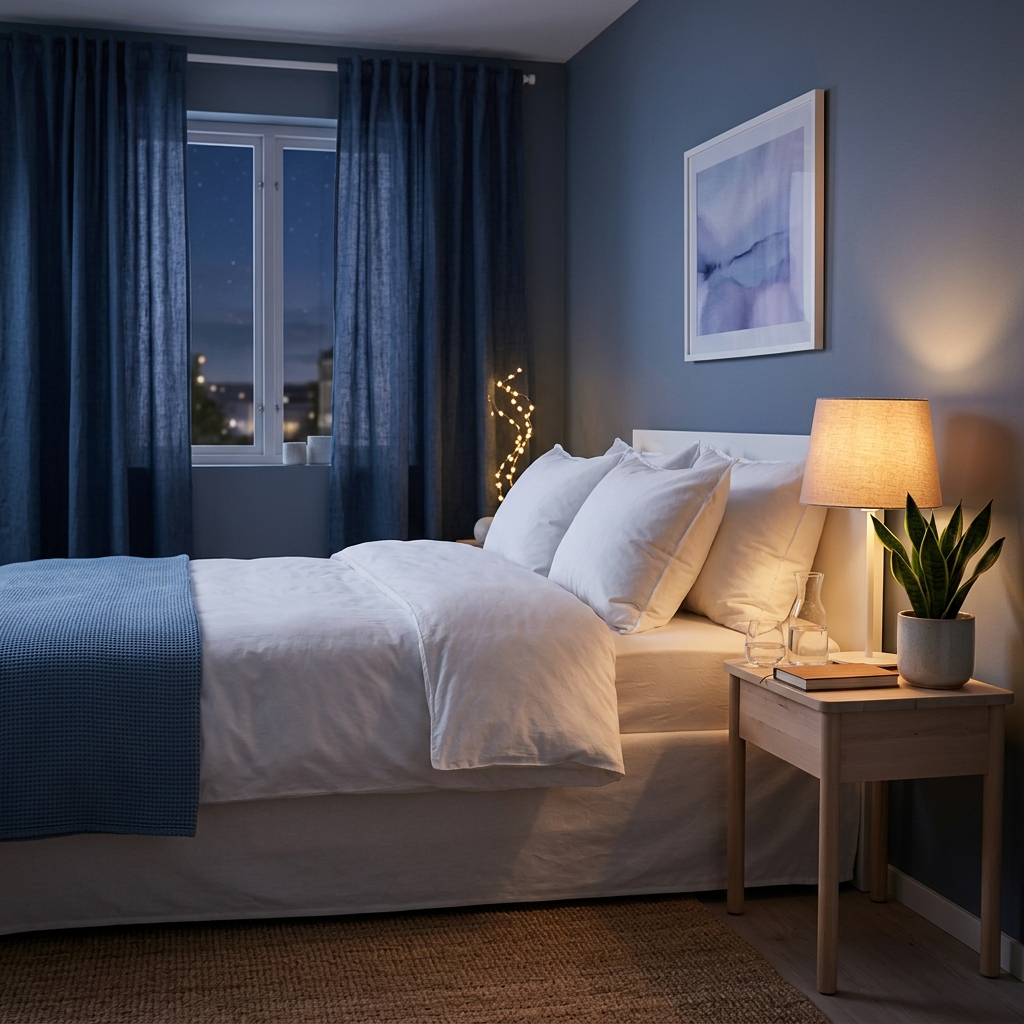
Your bedroom should be a sleep sanctuary. If it doubles as your office, entertainment center, and gym, your brain won't associate it with rest.
Temperature
Your body needs to drop its core temperature by about 1-2°F to initiate sleep. Keep your bedroom at 65-68°F (18-20°C). This is cooler than most people think, but research consistently shows it's optimal.
Light
- Block all light: Use blackout curtains or a quality sleep mask. Even tiny amounts of light can disrupt melatonin production
- Cover LEDs: Put tape over standby lights on electronics. Your charging indicator is brighter than you think
- No screens in bed: The blue light from phones and tablets suppresses melatonin by up to 50%
Sound
- White noise machine or fan: Consistent background noise masks sudden sounds that cause micro-awakenings
- Earplugs: If you live in a noisy area, soft silicone earplugs can dramatically improve sleep quality
Tonight, lower your thermostat by 2 degrees, put your phone in another room, and notice the difference. These two changes alone can improve sleep quality by 20-30% according to sleep researchers.
3. Build a Wind-Down Routine
You can't go from 100 mph to asleep in minutes. Your body needs a transition period. Create a 60-90 minute wind-down routine before bed:
- Set a "screens off" time: 60 minutes before bed, put away all screens. Yes, really. Use this time for analog activities
- Dim the lights: Switch to warm, dim lighting in the evening. Your body interprets bright light as "daytime"
- Read a book: Physical books (not tablets) are one of the best pre-sleep activities. Fiction works especially well
- Stretch or do light yoga: 10-15 minutes of gentle stretching activates your parasympathetic nervous system
- Journaling: Write down tomorrow's to-do list or 3 things you're grateful for. This "offloads" worrying thoughts
- Warm shower or bath: The rapid cooling after warming up mimics your body's natural sleep onset temperature drop
4. Daily Habits That Improve Sleep
Sleep quality is determined by what you do all day, not just at bedtime:
Get Morning Sunlight
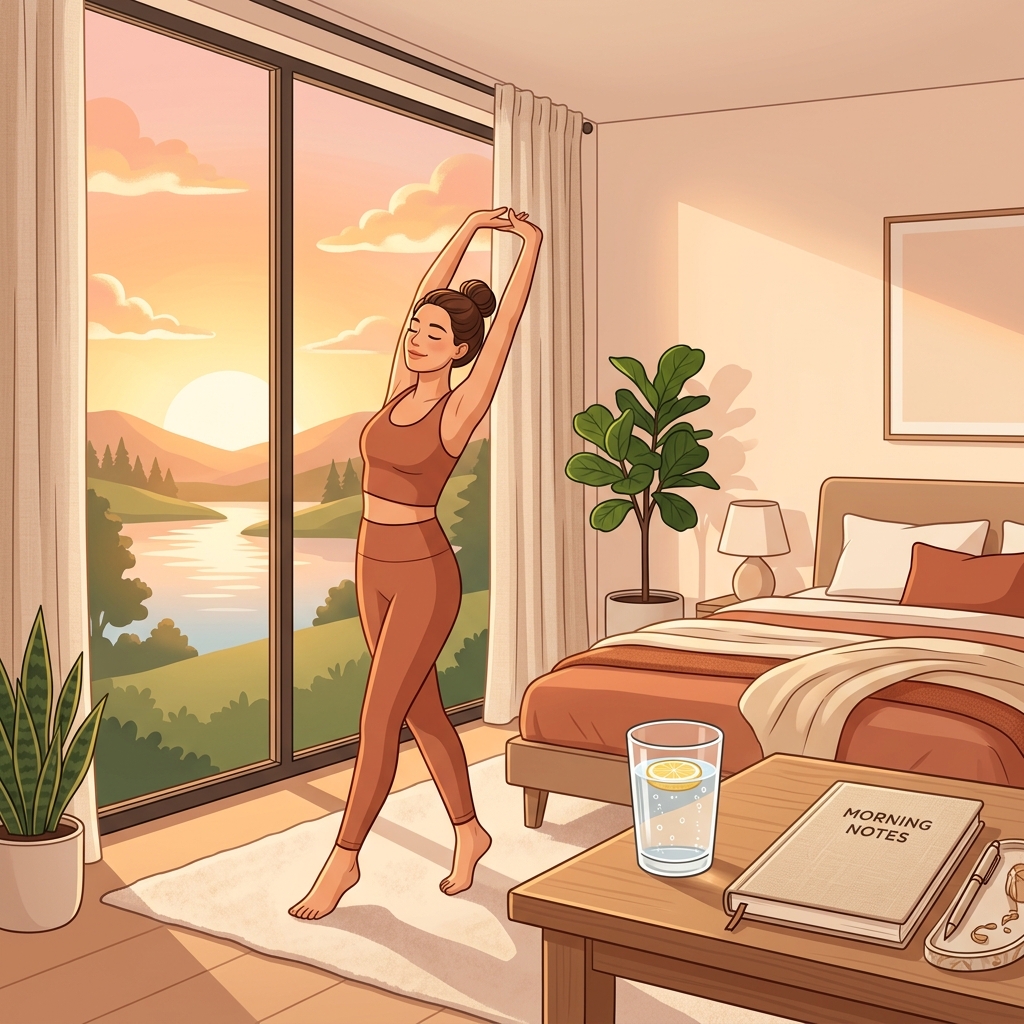
Within the first 30-60 minutes of waking, get 10-15 minutes of natural sunlight. This sets your circadian clock and triggers a cortisol spike that makes you alert now and sleepy later. Even on cloudy days, outdoor light is 10-50x brighter than indoor lighting.
Exercise (But Time It Right)
Regular exercise dramatically improves sleep quality. However, intense workouts within 2-3 hours of bedtime can raise body temperature and adrenaline, making it harder to fall asleep. Morning or afternoon exercise is ideal for home workouts or gym sessions.
Keep a Consistent Schedule
Go to bed and wake up at the same time every day — including weekends. This is the single most impactful sleep habit. Your body's circadian rhythm thrives on consistency. "Social jet lag" (sleeping in 2-3 hours on weekends) disrupts your clock as much as traveling across time zones.
5. What to Avoid for Better Sleep
- Caffeine after 2 PM: Caffeine has a half-life of 5-7 hours. That 3 PM coffee still has half its caffeine in your system at 9 PM. Switch to decaf or herbal tea after lunch
- Alcohol before bed: It might help you fall asleep faster, but alcohol fragments your sleep cycles, reducing REM sleep by up to 40%. You'll wake up feeling unrested
- Large meals within 3 hours of bed: Digestion raises core temperature and can cause reflux. A light snack is fine, a full dinner is not
- Napping after 3 PM: Late naps steal from your "sleep pressure" — the natural buildup of adenosine that makes you sleepy at night. If you must nap, keep it to 20 minutes before 2 PM
- Clock-watching: Staring at the clock when you can't sleep creates anxiety. Turn your clock away from view
If you can't fall asleep within 20 minutes, get up. Go to a dimly lit room and do something boring (read, fold laundry). Only return to bed when you feel sleepy. This prevents your brain from associating your bed with frustration and wakefulness.
6. How to Track Your Sleep
You can't improve what you don't measure. Consider these approaches:
- Sleep diary: The simplest method. Record bedtime, wake time, how long it took to fall asleep, and how you feel. After 2 weeks, patterns emerge
- Wearable trackers: Devices like the Apple Watch, Fitbit, or Oura Ring track sleep stages, heart rate variability, and blood oxygen. Not perfectly accurate, but useful for trends
- Rate your mornings: Every morning, rate your energy on a 1-10 scale. Over time, correlate this with your habits to see what works for you
Conclusion
Better sleep isn't about one magic trick — it's about consistently stacking small habits that tell your body "it's time to rest." Fix your environment, build a wind-down routine, and respect your body's natural rhythms.
Start tonight with just one change. Put your phone in another room. Lower the thermostat. Set a consistent bedtime. Within a week, you'll feel the difference — more energy, better mood, sharper thinking. Sleep is free, and it's the most powerful health tool you have.