
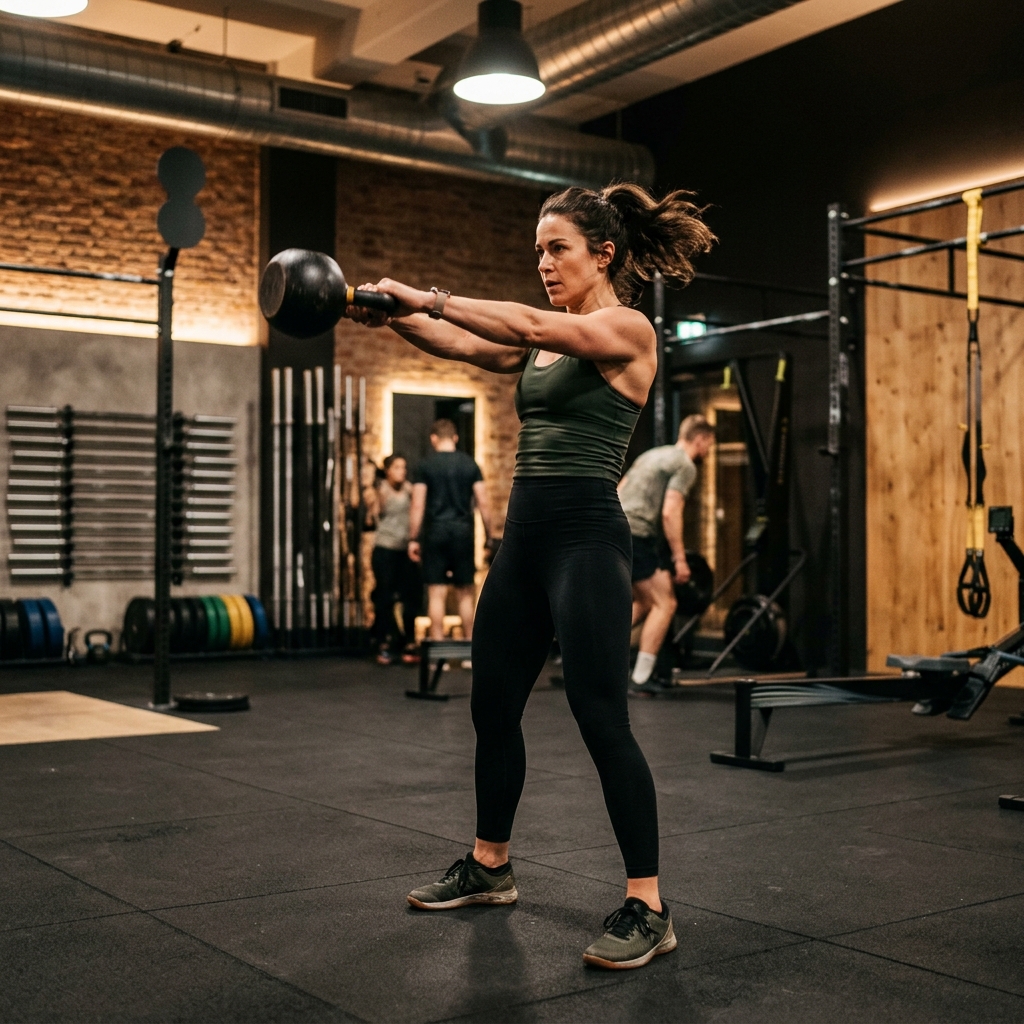
For decades, the fitness industry sold us a very specific image of health: isolated muscle groups, heavy barbell squats, bicep curls in front of the mirror, and endless hours on the elliptical machine. But as we move deeper into the 2020s, a profound paradigm shift is occurring. We are realizing that having huge biceps or running a marathon doesn't necessarily mean you are equipped for the physical demands of a long, healthy life. Enter the era of Functional Fitness.
Functional fitness isn't about how you look; it's about how you move. It is a training philosophy designed to prepare your body for real-life activities—whether that's carrying heavy groceries up a flight of stairs, playing with your children without pulling a back muscle, or maintaining your independence as you age. In this guide, we will explore why functional fitness is the ultimate investment in your longevity and how you can start integrating it into your routine today.
What is Functional Fitness?
At its core, functional fitness exercises train your muscles to work together and prepare them for daily tasks by simulating common movements you might do at home, at work, or in sports. While traditional weightlifting often focuses on isolating a single muscle group (like a seated leg extension machine isolating the quads), functional fitness utilizes multi-joint, multi-muscle movements.
The human body is an integrated system. In everyday life, you rarely use just one muscle in isolation. When you bend over to pick up a heavy box, you are using your calves, hamstrings, glutes, core, lower back, lats, and forearms in a complex, coordinated symphony. If your gym routine consists solely of machines that support your back and guide your movement path, you are failing to train the crucial stabilizing muscles necessary for real-world tasks.
The Seven Fundamental Human Movements
To train functionally, you must focus on the fundamental movement patterns that humans evolved to perform. Every functional fitness program should be built around these seven core movements:
1. The Squat
Squatting is perhaps the most fundamental human movement. Sitting down in a chair and standing back up is a squat. Functional variations include the Goblet Squat (holding a kettlebell or dumbbell at your chest) and the Front Squat. These variations force your core to engage to keep you upright, mimicking real-life lifting mechanics much better than a leg press machine.
2. The Hinge
The hinge is all about bending at the hips while keeping a neutral spine. It is the movement required to pick something off the floor. The classic exercise here is the Deadlift (using a barbell, dumbbells, or a kettlebell). Mastering the hinge pattern is the absolute best way to prevent lower back injuries in daily life, as it teaches you to lift with your powerful glutes and hamstrings rather than your vulnerable lumbar spine.
3. The Lunge
Lunging involves asymmetrical stance work—stepping forward, backward, or sideways. Life rarely happens symmetrically. Walking up stairs, stepping over an obstacle, or recovering from a trip all require single-leg strength and balance. Walking lunges and step-ups are fantastic functional exercises.
4. The Push (Horizontal and Vertical)
Pushing movements involve moving weight away from your body. Think of opening a heavy door (horizontal push) or placing a box on a high shelf (vertical push). Push-ups are the ultimate functional horizontal push because they require immense core stability. Overhead presses with dumbbells serve as the vertical push.
5. The Pull (Horizontal and Vertical)
Pulling movements involve bringing weight toward your body. Pulling a weed from the garden or opening a heavy drawer. Pull-ups (vertical) and bent-over rows (horizontal) are key exercises. Most people over-train the push and under-train the pull, leading to the rounded-shoulder posture so common in office workers.
6. Rotation (and Anti-Rotation)
Most gym machines lock you into a sagittal plane (moving strictly forward and backward). But life requires twisting—throwing a ball, looking over your shoulder, sweeping the floor. Exercises like Russian twists, or better yet, Pallof presses (which train your core to resist rotation), are vital for spinal health.
7. The Carry
The farmer's carry is arguably the most functional exercise in existence. Pick up heavy weights in both hands and walk. It builds grip strength, core stability, shoulder stability, and cardiovascular endurance simultaneously. It is the exact movement pattern of carrying heavy grocery bags from the car.
The Benefits for Longevity
Why is this shift toward functional training so important for living a long, healthy life? The benefits extend far beyond muscle mass.
Injury Prevention
The majority of injuries in daily life do not happen because a person isn't strong enough; they happen because a person moves incorrectly or lacks stability in a compromised position. By training your body to move through full ranges of motion in multiple planes, you bulletproof your joints and connective tissues against the unexpected tweaks and pulls of everyday life.
Improved Balance and Coordination
As we age, falls become a leading cause of fatal and non-fatal injuries. Functional fitness, particularly unilateral (single-leg) exercises like lunges and step-ups, directly improves your balance, proprioception (your body's awareness of its position in space), and neuromuscular coordination.
Bone Density
Osteoporosis is a significant threat to longevity. Weight-bearing functional exercises load the skeletal system, prompting the body to build denser, stronger bones. The dynamic nature of functional training often provides multidirectional stress on the bones, which is more effective at building density than unidirectional machine training.
Building Your Functional Routine
You don't need a fancy gym or complicated equipment to start a functional fitness routine. In fact, a pair of kettlebells or dumbbells and a pull-up bar are all you need for a world-class workout.
A sample full-body functional workout might look like this:
- Warm-up: 5 minutes of dynamic stretching (leg swings, arm circles, torso twists).
- A1. Goblet Squat: 3 sets of 10-12 reps.
- A2. Push-ups: 3 sets of as many reps as possible.
- B1. Kettlebell Romanian Deadlift (Hinge): 3 sets of 10 reps.
- B2. Dumbbell Row (Pull): 3 sets of 10 reps per arm.
- C1. Walking Lunges: 3 sets of 20 total steps.
- C2. Farmer's Carry: 3 sets of 45-second walks with heavy dumbbells.
This routine covers all the fundamental movement patterns, requires minimal equipment, and can be completed in under 45 minutes.
Conclusion: Training for the Sport of Life
The ultimate goal of fitness shouldn't just be to look good in a swimsuit for three months out of the year. The goal should be to build a resilient, capable machine that allows you to experience life to the fullest without physical limitations.
By shifting your focus from aesthetic isolation to functional integration, you are not just working out; you are actively investing in your independence and vitality for decades to come. Ditch the machines, pick up some free weights, and start training for the most important sport of all: everyday life.
Disclaimer: This article is for informational purposes only and does not constitute medical advice. Always consult with a physician before beginning any new exercise program, especially if you have pre-existing health conditions.
Frequently Asked Questions
Am I too old to start functional fitness?
Absolutely not. Functional fitness is arguably more important the older you get. The goal is to preserve independence and prevent falls. A goblet squat mimics standing up from a chair; a farmer's carry mimics carrying groceries. Start with bodyweight movements and focus entirely on form. It is never too late to begin building physical resilience.
Will functional fitness build as much muscle as bodybuilding?
It depends on your definition of "muscle." If your goal is to step on a bodybuilding stage with massive, isolated biceps, then a traditional split routine is better. However, functional fitness builds dense, athletic muscle across your entire body. Gymnasts, sprinters, and CrossFit athletes all utilize functional movements and possess incredible physiques.