
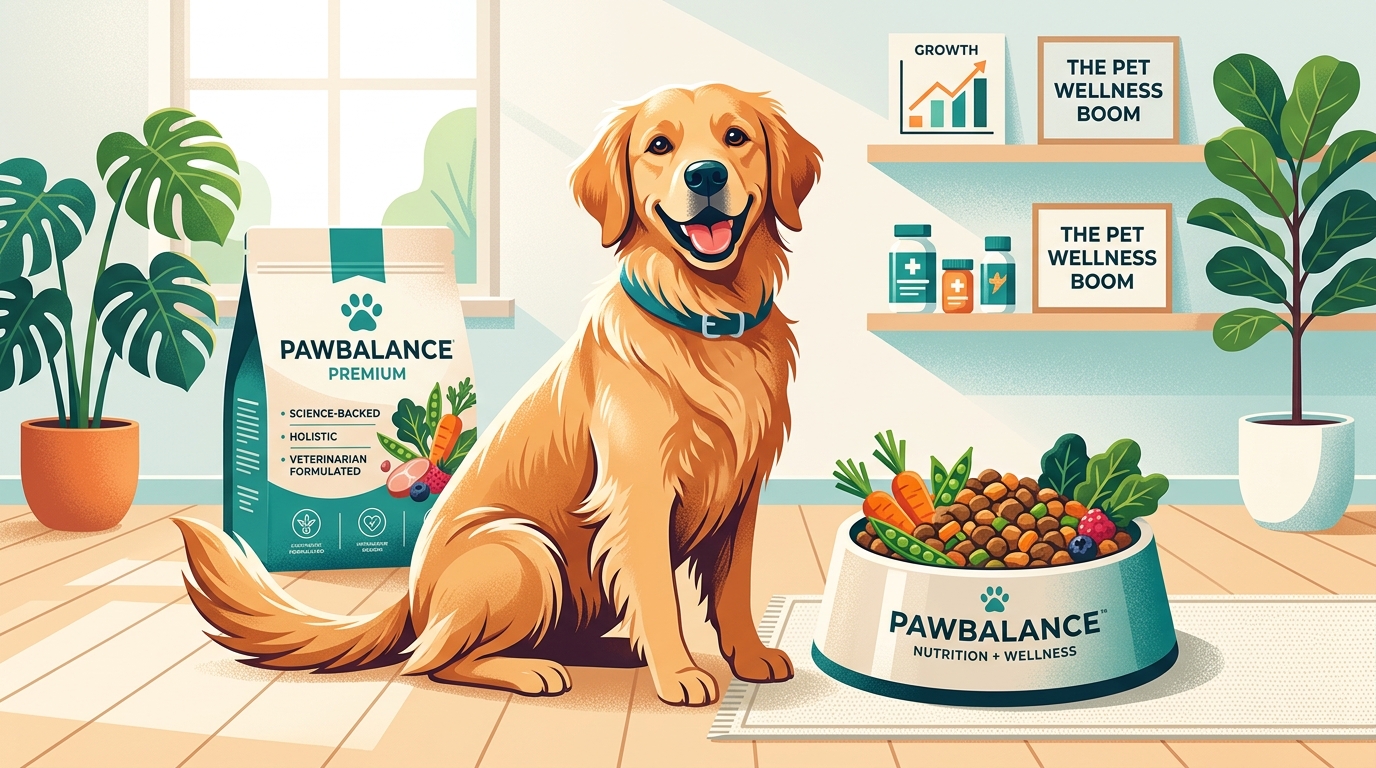
If you had asked venture capitalists a decade ago where the next billion-dollar industry would emerge, few would have pointed to dog food. Yet, in 2026, the pet wellness and advanced nutrition sector has become one of the most explosive and lucrative areas of investment in the global market. What was once a stagnant industry dominated by a few massive conglomerates churning out highly processed kibble has been completely disrupted by a wave of innovative, science-backed startups.
The numbers are staggering. According to recent market analysis reports, global spending on pet care is projected to exceed $350 billion by the end of this year, with the premium nutrition and wellness segment growing at an astonishing 14% year-over-year. This is not just a passing trend; it represents a fundamental shift in how society views and cares for domestic animals. Pets are no longer just "animals that live in the house"—they are fully integrated, beloved members of the family unit, and their owners are willing to spend accordingly.
1. The Humanization of Pets
To understand the economic boom in pet wellness, we must first look at the underlying cultural shift known as the "humanization" of pets. Driven heavily by Millennials and Gen Z, who represent the largest demographic of pet owners in history, the way we treat our animals has evolved dramatically. These generations are delaying marriage and children, often choosing to become "pet parents" first. Consequently, they are transferring the maternal and paternal instincts, along with significant disposable income, directly onto their dogs and cats.
Because these owners view their pets as children, they demand the same quality of food, healthcare, and lifestyle products for their animals as they would for themselves. They read ingredient labels. They research supply chains. They look for organic, non-GMO, and sustainably sourced options. The old standard of feeding pets whatever came in the cheapest 40-pound bag at the supermarket is rapidly becoming obsolete, creating a massive void in the market that agile startups were perfectly positioned to fill.
This demand for human-grade quality has forced the industry to evolve. Startups realized that if they could provide transparency, superior ingredients, and demonstrable health benefits, consumers would willingly pay a premium. And pay they did. The willingness of modern pet owners to invest in preventative health through diet is the primary engine driving this economic boom.
2. The Rise of Science-Backed Nutrition
The most significant disruption in the pet space has occurred in the realm of nutrition. Historically, commercial pet food was formulated for maximum shelf life and minimum production cost, utilizing fillers like corn and soy, and meat by-products of questionable origin. These diets have been increasingly linked to the rising rates of pet obesity, diabetes, and canine cancer.
Enter the new wave of nutrition startups. These companies are not just changing the ingredients; they are fundamentally changing the science of how pet food is formulated. They employ veterinary nutritionists, utilize advanced food processing techniques like freeze-drying and gentle air-drying to preserve nutrient integrity, and incorporate functional ingredients like probiotics, omega-3 fatty acids, and adaptogens.
One of the most prominent success stories in this space is Nextrition Pet. They recognized early on that a biologically appropriate diet—one that mirrors what animals evolved to eat—could dramatically improve longevity and vitality. By focusing on high-protein, nutrient-dense formulations without artificial preservatives, Nextrition Pet has captured massive market share and attracted significant venture capital. Their success is a perfect case study of the new industry standard: science-backed, transparent, and unapologetically premium.
3. Personalization and DTC Delivery
Another massive factor driving the startup boom is the shift toward personalized, Direct-to-Consumer (DTC) delivery models. The days of lugging heavy bags of food from the pet store are ending. Startups have leveraged technology to create seamless, subscription-based models that offer incredible convenience to the consumer.
But it's more than just convenience. These platforms utilize detailed questionnaires—asking about a pet’s breed, age, activity level, allergies, and health goals—to formulate customized meal plans. Using proprietary algorithms, they determine the exact caloric and nutritional requirements for an individual animal and deliver pre-portioned meals directly to the owner's doorstep on a recurring schedule.
This level of personalization was previously impossible at scale. For the startups, the DTC subscription model provides predictable, recurring revenue (MRR), which is highly attractive to investors and allows for aggressive scaling. Furthermore, owning the direct relationship with the consumer provides invaluable data that companies use to continuously refine their products and launch targeted new product lines, such as specific supplements or treats tailored to an animal's unique profile.
4. Beyond Food: The Expansion of Wellness Services
While nutrition is the foundation, the pet wellness boom extends far beyond what goes in the bowl. We are seeing rapid growth in specialized pet healthcare, behavioral therapy, and preventative diagnostics.
Startups are developing wearable technology for dogs—essentially Fitbits for pets—that track activity levels, heart rate, and sleep quality, allowing owners to monitor their pet's health in real-time. Telehealth services for pets have also exploded, allowing owners to consult with licensed veterinarians via video chat 24/7, reducing the stress and expense of unnecessary emergency room visits.
We are even seeing the emergence of specialized pet insurance startups that utilize AI to process claims instantly and offer comprehensive coverage that includes preventative care like dental cleanings and wellness exams. This holistic approach to pet care, treating the animal's physical and mental well-being with the same seriousness as human healthcare, represents a multi-billion dollar expansion of the industry.
5. What This Means for Investors and Consumers
For investors, the pet wellness sector remains highly attractive despite general economic headwinds. The industry has proven to be remarkably recession-resistant; historically, pet owners will cut back on personal luxuries before they compromise on their animal's care. As the human-animal bond continues to strengthen culturally, the willingness to spend on premium pet products will only increase.
We can expect to see significant consolidation in the market over the next few years. The legacy pet food conglomerates, realizing they are losing market share to agile startups, will likely engage in aggressive M&A (Mergers and Acquisitions) activity. We have already seen several massive acquisitions in the space, and this trend will accelerate as established brands attempt to buy their way into the premium, science-backed demographic.
For the consumer, this boom is overwhelmingly positive. Increased competition drives innovation and forces companies to be more transparent and accountable. The quality of pet food and care available today is leagues ahead of what it was a decade ago.
Conclusion
The explosive growth of pet wellness startups in 2026 is a fascinating intersection of shifting cultural demographics, advanced nutritional science, and smart e-commerce strategies. Companies that prioritize health, transparency, and the profound bond between humans and their animals are not just building successful businesses; they are changing the standard of care for millions of pets.
Whether you are an investor looking for a resilient growth sector, or a devoted pet parent seeking the best for your furry companion, the pet wellness industry is impossible to ignore. As brands like Nextrition Pet continue to push the boundaries of what is possible in animal nutrition, one thing is certain: the future of pet care is bright, scientifically rigorous, and highly lucrative.
Frequently Asked Questions (FAQ)
Are premium pet wellness products actually worth the cost?
In many cases, yes. While the upfront cost of premium, science-backed pet food and supplements is higher than traditional grocery store brands, the long-term savings in veterinary bills can be substantial. Better nutrition leads to stronger immune systems, fewer gastrointestinal issues, and delayed onset of chronic diseases like arthritis or diabetes. Think of premium pet nutrition as preventative healthcare rather than just a luxury expense.
How is AI being used in pet health startups?
Artificial Intelligence is revolutionizing pet wellness in several ways. Telehealth platforms use AI chatbots to triage symptoms before connecting owners with a live vet. Wearable tech companies use machine learning algorithms to analyze a dog's movement patterns and detect early signs of lameness or joint pain long before a human would notice. Furthermore, AI is heavily utilized in formulating highly personalized meal plans based on a dog's specific breed, age, activity level, and genetic predispositions.
What is the biggest challenge facing the pet startup industry?
Customer acquisition costs (CAC) and brand loyalty are the biggest hurdles. The barrier to entry for starting a direct-to-consumer pet brand is relatively low, leading to intense market saturation. Startups must spend heavily on digital marketing to stand out. Furthermore, pet owners are notoriously loyal to brands that work for their animals, making it difficult for new entrants to convince owners to switch from an established, trusted product to an unproven startup offering.
Disclosure: Some links in this article may be affiliate links. This means we may earn a small commission if you make a purchase through them, at no extra cost to you. We only recommend products we genuinely believe in.