Tech Innovations Shaping the Future of Remote Work

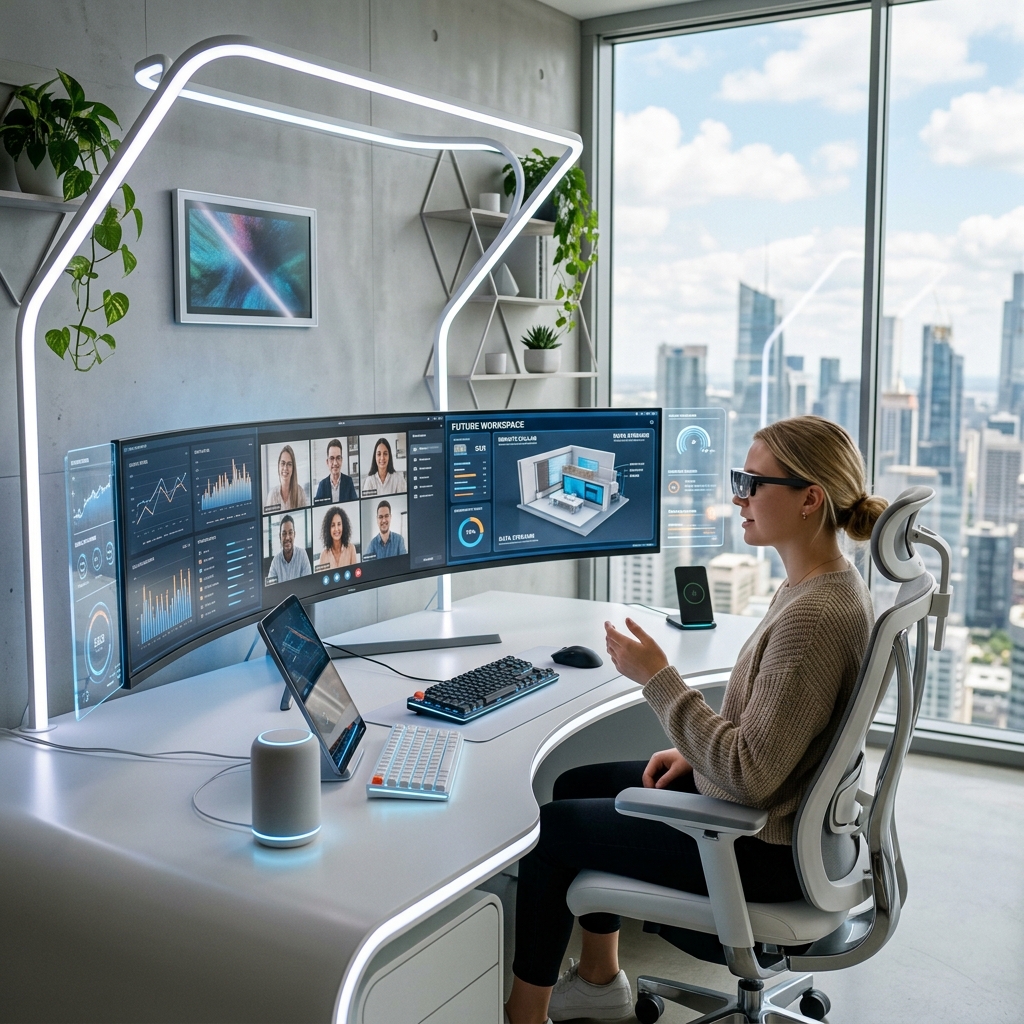
The debate around remote versus in-office work has largely been settled in 2026, thanks in part to a wave of technological innovations that have made remote collaboration highly efficient and deeply engaging. What was once seen as a temporary pandemic-era compromise has now evolved into the permanent, preferred operational model for the vast majority of knowledge-based industries globally.
As companies lean heavily into global talent pools, unconstrained by geographical limitations, software and hardware companies have rushed to fill the gaps left by physical separation. The resulting ecosystem of remote work technology has fundamentally changed not just where we work, but how we interact, collaborate, and innovate. Here is an in-depth exploration of the top technological trends reshaping the modern home office and the global workforce at large.
1. Virtual Reality (VR) and Augmented Reality (AR) Collaboration
Zoom fatigue is officially a thing of the past. The widespread adoption of lightweight, high-resolution VR headsets and AR glasses has given rise to immersive virtual workspaces that bridge the gap between digital convenience and physical presence. Teams can now whiteboard complex architectures, code together in shared environments, and hold daily standups in 3D spaces that feel remarkably close to real life.
- Spatial Audio: Advanced audio engineering allows you to hear colleagues based on their virtual position in the room. If someone is standing to your left in the virtual space, their voice comes from the left. This dramatically reduces the cognitive load of video calls where all voices come from the same flat plane.
- Real-time Translation: Built-in AI translates speech instantaneously, breaking down language barriers in international teams. A developer in Tokyo can speak Japanese, and a product manager in London will hear it in English with matching lip-sync avatars.
- Haptic Feedback: The integration of haptic gloves and responsive desk surfaces means that when you hand a virtual document to a colleague, you can actually feel the resistance and transfer of the object.
2. AI Co-pilots for Everything
Artificial intelligence is no longer just a chatbot you consult occasionally; it's an embedded, context-aware assistant in every tool we use. From drafting nuanced emails and organizing complex schedules to automatically summarizing long meetings into actionable bullet points, AI is drastically reducing administrative overhead.
In 2026, the average knowledge worker employs three to five specialized AI agents. There is the calendar agent that negotiates meeting times autonomously with other agents. There is the research agent that scours the internet and internal databases to prepare briefing documents before a call. And there is the drafting agent that writes the first version of reports, code, or presentations based on rough voice notes.
3. Asynchronous Work Infrastructure
The push for asynchronous work has led to better project management software that heavily relies on structured, contextual communication rather than real-time pings. The realization that "always-on" culture leads to burnout has prompted a shift toward tools that respect deep work.
Video messaging platforms and highly visual issue trackers let workers communicate complex ideas on their own time zones without slowing down progress. Instead of scheduling a 30-minute meeting to explain a design change, a designer records a 3-minute screen-share video with embedded interactive elements that the developer can watch and respond to 12 hours later.
4. Advanced Cybersecurity for the Distributed Edge
With the corporate perimeter dissolving, cybersecurity has had to adapt rapidly. In the past, companies relied on securing a physical building and its internal network. Today, the network is literally everywhere, spanning thousands of home routers, coffee shop Wi-Fi networks, and cellular connections.
Zero Trust Architecture (ZTA) is now the default. This means that no device or user is trusted by default, regardless of whether they are on a corporate VPN or not. Continuous authentication measures—including biometric monitoring, typing cadence analysis, and AI-driven behavioral threat detection—ensure that the person behind the keyboard is actually the authorized employee. Hardware-based security keys have completely replaced passwords, eliminating phishing as a primary attack vector.
5. Ergonomics and Smart Home Offices
The physical environment of remote work has seen as much innovation as the software. The dining room table is no longer an acceptable long-term workspace. Smart desks now monitor your posture using embedded sensors and gently adjust their height throughout the day to encourage movement.
Lighting systems sync with your circadian rhythm and the specific tasks you are performing, shifting to cool blue light for analytical work and warm amber light for creative brainstorming. Acoustic dampening technology has advanced to the point where active noise-canceling software can completely filter out the sound of a barking dog, a crying baby, or construction work happening just outside your window, transmitting only the sound of your voice to the meeting.
6. The Digital Nomad Infrastructure
As companies have embraced remote work, entire countries have completely restructured their immigration and tax systems to attract high-earning digital nomads. Over 70 countries now offer dedicated digital nomad visas that provide tax incentives, streamlined banking access, and long-term residency options.
Technology has stepped up to support this lifestyle. Global internet coverage via low-earth orbit satellite networks means that remote workers can reliably join high-definition video calls from a cabin in the woods, a beach in Bali, or a campervan crossing the Andes. The concept of "work from anywhere" is no longer a marketing slogan; it is a technical reality.
7. Employee Well-being and Mental Health Tech
One of the primary challenges of remote work has always been isolation and the blurring of boundaries between work and personal life. Technology companies have recognized this and are developing solutions focused entirely on employee well-being.
Digital platforms now analyze team communication patterns to detect early signs of burnout, prompting managers to intervene before an employee reaches a crisis point. Virtual watercoolers and AI-facilitated social matching programs help build culture and camaraderie across thousands of miles. Some enterprise software now features mandatory "hard stops," physically locking employees out of their work systems at the end of their designated shift to enforce a healthy work-life balance.
The Future Outlook: 2030 and Beyond
Looking ahead to the end of the decade, the trajectory of remote work technology suggests even deeper integration of biological and digital systems. Brain-computer interfaces (BCIs), currently in their infancy, promise to allow workers to interact with software using only their thoughts, further increasing the speed of execution and reducing physical strain.
Holographic projection technology is expected to become commercially viable for enterprise use by 2029, allowing a colleague to appear in three dimensions in your home office, completely eliminating the need for VR headsets. As these technologies mature, the distinction between "remote" and "in-person" work will eventually lose all meaning.
Frequently Asked Questions
Will AI replace remote jobs entirely?
While AI will undoubtedly automate specific tasks, it is highly unlikely to replace entire knowledge-based jobs in the near term. Instead, it acts as a force multiplier. Remote workers who effectively leverage AI will replace those who do not. The focus is shifting from task execution to strategic oversight, emotional intelligence, and complex problem-solving—areas where human intuition remains superior.
How are companies handling taxes and payroll across borders?
The rise of Global Employer of Record (EOR) platforms has completely solved the international payroll and compliance problem. These platforms handle local tax deductions, benefits administration, and legal compliance in over 150 countries, allowing a company in San Francisco to legally and easily hire a developer in Kenya or a designer in Vietnam without setting up a local corporate entity.
Is internet reliability still a major issue for digital nomads?
No. The deployment of global satellite internet networks, combined with the ubiquitous availability of 5G and early 6G cellular networks, has largely eliminated connectivity issues. Redundant connection setups (e.g., satellite backed up by cellular) are now standard practice for serious remote professionals traveling off the grid.
How do remote teams build culture without a physical office?
Culture in a remote environment is built through intentionality rather than proximity. Companies are investing heavily in annual or bi-annual company retreats where the entire focus is on social bonding and strategic alignment, rather than daily execution. Day-to-day culture is fostered through transparent communication, public recognition, dedicated social channels, and virtual co-working spaces.
What is the biggest security threat to remote workers?
Social engineering and sophisticated AI-generated deepfakes are currently the largest threats. Attackers use voice cloning and hyper-realistic video deepfakes to impersonate executives and authorize fraudulent wire transfers or request sensitive data. Companies are combating this by establishing strict verification protocols that require out-of-band confirmation for any sensitive request.
Conclusion
With these incredible innovations, remote work is not just an alternative to the traditional office—it has proven to be a vastly superior model for focused, high-output productivity, employee satisfaction, and global talent acquisition. As the technology continues to evolve, the businesses that embrace these tools will secure a massive competitive advantage over those stubbornly clinging to the geographical constraints of the past.