
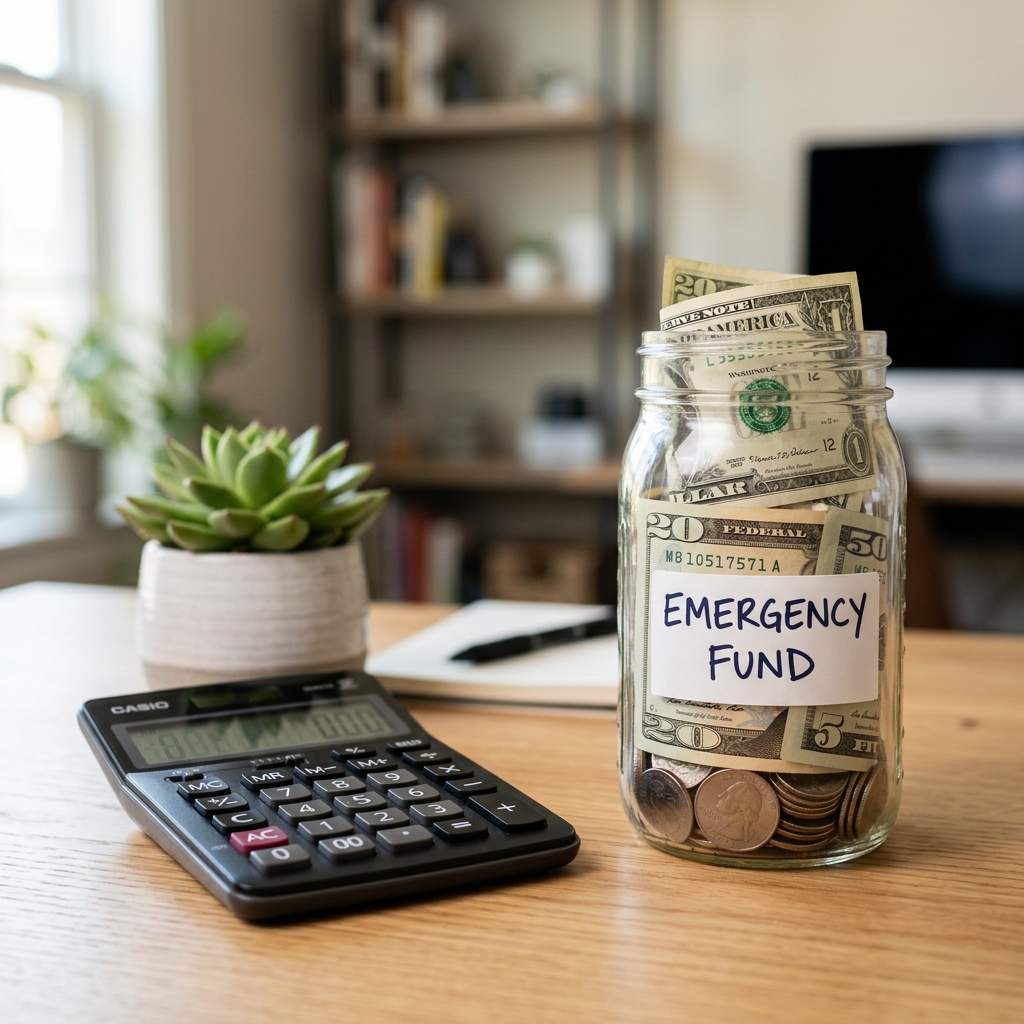
Life is unpredictable. A car breakdown, a medical bill, a sudden job loss — these things don't wait until you're financially ready. That's exactly why an emergency fund isn't optional. It's the foundation of every solid financial plan.
Yet according to recent surveys, nearly 56% of Americans can't cover an unexpected $1,000 expense from savings. If that sounds like you, don't worry — this guide will walk you through building your emergency fund from zero, step by step.
1. What Is an Emergency Fund?
An emergency fund is a dedicated savings account designed to cover unexpected, essential expenses. It's not for vacations, new gadgets, or impulse purchases — it's your financial safety net.
What Counts as an Emergency?
- Job loss: Covering rent, food, and bills while you find new work
- Medical emergencies: Unexpected hospital visits, prescriptions, or dental work
- Car repairs: A blown transmission or flat tire that prevents you from getting to work
- Home repairs: A broken furnace in winter or a leaking roof
- Family emergencies: Last-minute travel for a family crisis
What Is NOT an Emergency?
- A sale on something you've been wanting
- A concert or vacation opportunity
- Upgrading your phone because a new model dropped
- Holiday gifts (these are predictable — budget for them separately)
2. How Much Should You Save?
The classic recommendation is 3 to 6 months of essential living expenses. But the right amount depends on your situation:
- Stable job, dual income, no dependents: 3 months may be enough
- Single income, freelance, or self-employed: Aim for 6+ months
- Have dependents or health issues: 6-12 months provides peace of mind
Add up your essential monthly expenses: rent/mortgage, utilities, groceries, transportation, insurance, minimum debt payments. Multiply by 3, 6, or 12. That's your target. For example, if essentials cost $2,500/month, a 3-month fund = $7,500.
3. Where to Keep Your Emergency Fund
Your emergency fund needs to be accessible but separate from your everyday spending. The worst place? Your checking account, where it'll get spent. The best options:
- High-Yield Savings Account (HYSA): The gold standard. Accounts from Marcus, Ally, or SoFi offer 4-5% APY in 2026. Your money grows while staying accessible within 1-2 business days.
- Money Market Account: Similar to a HYSA with slightly higher minimums. Some offer debit card access for true emergencies.
- Separate bank entirely: Some people open an account at a different bank to add a "friction layer" — making it slightly harder to dip into impulsively.
Avoid: CDs (your money is locked up), investment accounts (too volatile), and cash under the mattress (no interest, no protection).
4. Step-by-Step: Building Your Fund from $0
Don't try to save $10,000 overnight. Here's a realistic, phased approach:
Phase 1: The Starter Fund ($500-$1,000)
Your first goal is a mini emergency fund. This covers small surprises — a flat tire, a vet bill, a broken appliance. Here's how to get there fast:
- Sell unused items: Go through your closet, garage, and drawers. Sell on Facebook Marketplace, eBay, or Poshmark. Most people can find $200-500 worth of stuff they don't use.
- Pick up a quick gig: A few weekends of DoorDash, dog walking, or freelance work can add $300-600.
- Redirect one payment: Cancel a subscription you barely use and redirect that money to savings. $15/month adds up.
Phase 2: One Month of Expenses
Once you have your starter fund, build toward covering one full month. This is where automation becomes your best friend:
- Set up an automatic transfer on payday — even $50-100/week adds up to $200-400/month
- Use the "pay yourself first" method: transfer to savings before spending on anything else
- Round up purchases with apps like Acorns or Chime's round-up feature
Phase 3: The Full 3-6 Month Fund
This is the long game. At this stage, boost your savings rate by:
- Saving windfalls: Tax refunds, bonuses, birthday money, cash-back rewards — deposit at least 50% into your fund
- Cutting one big expense: Negotiate your rent, refinance a loan, or switch insurance providers. One big win can free up $100-300/month
- Increasing income: Ask for a raise, take on freelance work, or start a side hustle
Track your progress visually. Use a simple chart on your fridge, a savings tracker app, or a spreadsheet. Seeing your fund grow is incredibly motivating and keeps you on track when you're tempted to spend.
5. Common Mistakes to Avoid
- Waiting for the "right time": There's never a perfect time. Start with $20 this week.
- Setting the goal too high: $15,000 feels impossible starting from zero. Focus on the first $500 — momentum builds.
- Using it for non-emergencies: Be honest with yourself. A sale is not an emergency. A want is not a need.
- Keeping it too accessible: If your fund is in your checking account, you'll spend it. Keep it separate.
- Not replenishing after use: If you dip into your fund (which is fine — that's what it's for), make rebuilding it a priority immediately.
6. How to Stay Motivated
Building an emergency fund is a marathon, not a sprint. Here's how to keep going when it feels slow:
- Celebrate milestones: Treat yourself (modestly) at $500, $1,000, $2,500, and your final goal
- Remember your "why": Imagine the peace of mind when you can handle any surprise without going into debt
- Automate and forget: Once your transfers are automatic, you'll stop missing the money within 2-3 weeks
- Read success stories: r/personalfinance is full of people who built emergency funds on modest incomes. If they can do it, so can you
Conclusion
An emergency fund is the single most important thing you can do for your financial health. It eliminates the stress of unexpected expenses, keeps you out of high-interest debt, and gives you the freedom to make better decisions when life throws curveballs.
You don't need to save $10,000 tomorrow. Start with $20 this week. Set up an automatic transfer. Open a high-yield savings account. Take the first step — your future self will be grateful you did.
Frequently Asked Questions
Should I keep my emergency fund in cash at home?
No. While it might feel secure to have physical cash, it is dangerous and financially inefficient. Cash at home can be stolen, destroyed in a fire, or lost. More importantly, physical cash loses purchasing power every single year due to inflation. By keeping your emergency fund in a High-Yield Savings Account (HYSA), your money is FDIC-insured (completely safe from bank failure) and earns a significant interest rate that helps combat inflation, all while remaining highly liquid and accessible within 24-48 hours.
What exactly qualifies as a financial emergency?
A true financial emergency is an unexpected, necessary, and urgent expense. Examples include: a sudden job loss or reduction in income, a major medical or dental emergency, critical car repairs needed to commute to work, or urgent home repairs (like a broken furnace in winter or a leaking roof). Things that do NOT qualify as emergencies include: a last-minute vacation, a great sale on a television, Christmas presents, or regular car maintenance (which should be budgeted for separately).
If I lose my job, how long should my emergency fund last?
The standard recommendation is 3 to 6 months of essential living expenses. However, this depends entirely on your industry and personal risk factors. If you work in a highly specialized field where it typically takes 6 to 9 months to find a new role, you should aim for a larger fund. Conversely, if you work in an in-demand field (like nursing) where you could realistically find a new job next week, a 3-month fund is likely sufficient.